The retro gaming gaming PC comparison">handheld market experienced a major structural shock this week when the core engineering team behind Azahar—the primary open-source Nintendo 3DS emulation project—publicly severed ties with and boycotted hardware manufacturer Anbernic. The dispute erupted following official marketing campaigns for Anbernic's upcoming dual-screen clamshell console, the RG DDS, which showcased an unauthorized modified software build marketed as "Azahar Plus."
At the core of the controversy lies a high-stakes clash between commercial hardware manufacturers prioritizing out-of-the-box convenience and open-source software engineers fighting to protect their projects from catastrophic legal annihilation. Following Nintendo's landmark legal victories against Yuzu and the subsequent collapse of Citra, the boundary between legitimate clean-room reverse engineering and unlawful anti-circumvention has tightened significantly. Here is the comprehensive technical, architectural, and legal breakdown of why the Azahar team initiated an outright boycott against Anbernic.
1. The Hardware Catalyst: Anbernic RG DDS Clamshell Architecture
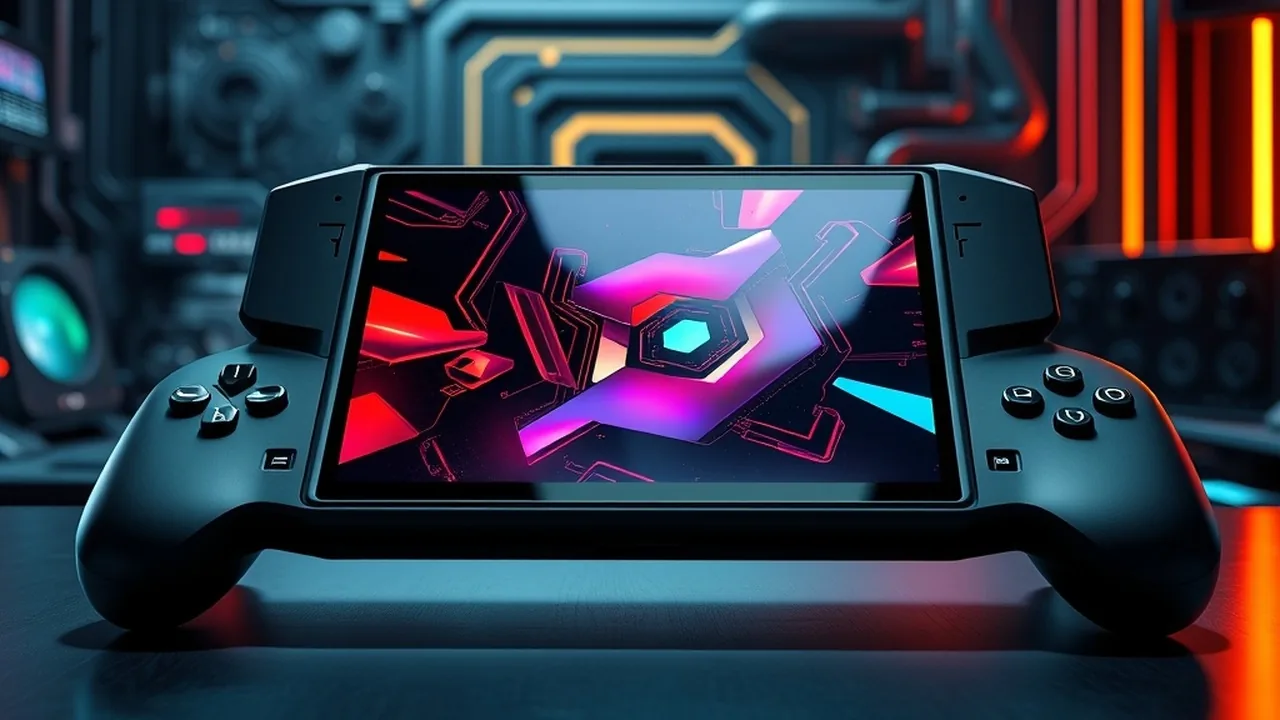
For years, dual-screen handheld emulation has suffered from an ergonomic compromise: running dual-screen Nintendo DS and 3DS titles on single 16:9 or 4:3 displays required awkward side-by-side splits or floating picture-in-picture windows. Anbernic engineered the RG DDS specifically to solve this physical bottleneck:
- Dual Display Configuration: Features an upper 4.0-inch 3:2 IPS primary panel (resolving 3DS top-screen stereoscopic buffers natively) paired with a lower 3.5-inch 4:3 touch-sensitive display dedicated to touch input and secondary HUD pipelines.
- System-on-Chip (SoC): Powered by an octa-core ARM processor (configured with ARM Cortex-A76 performance clusters alongside Cortex-A55 efficiency cores) paired with a Mali-G57 GPU, delivering sufficient memory bandwidth to sustain dual-surface frame-buffer synchronization at 3x native resolution.
- Physical Form Factor: A reinforced clamshell hinge engineered with 135-degree and 180-degree detents, designed to mirror the authentic mechanical posture of the New Nintendo 3DS XL.
While hardware enthusiasts praised the industrial design, Anbernic faced a critical software hurdle: Nintendo 3DS emulation requires high-performance display multiplexing across two physical framebuffers, a feature only supported in modern iterations of the Azahar codebase.
2. The Software Schism: Upstream Azahar vs. "Azahar Plus"
Following the settlement that terminated Citra development in early 2024, the Azahar team emerged with a rigorous legal architecture designed to survive scrutiny under DMCA Section 1201 (Circumvention of Technological Protection Measures). Upstream Azahar established strict compliance guardrails:
Tech Versus: Side-by-Side Compare Engine
Compare GPUs, CPUs, and Flagship Smartphones head-to-head with GSMArena-style specs, gaming FPS benchmarks, and winner verdicts.
- Zero Encrypted ROM Execution: Mainline Azahar requires users to decrypt their cartridge dumps locally using legitimate hardware keys extracted from their personally owned consoles. The emulator intentionally rejects raw encrypted
.3dsimage files. - No Proprietary Firmware or Key Distribution: Azahar contains clean-room implementations of system applets and refuses to bundle Nintendo's AES common keys, RSA root certificates, or boot ROM dumps.
- Clean GPLv2/GPLv3 Licensing: All contributions must preserve author attribution and maintain open source auditability without proprietary monetization layers.
However, Anbernic's marketing material prominently displayed an unverified fork labeled "Azahar Plus". According to the upstream Azahar development team, this downstream fork bypassed these legal firewalls by integrating hardcoded cryptographic seed lookups, enabling the execution of encrypted ROM archives directly, and utilizing the Azahar trademark without authorization. When the Azahar team demanded that the fork author rebrand and remove the circumvention routines, the request was rejected.
3. Architectural Breakdown: Cryptographic Handshakes and Seed Verification
To understand why software developers reacted with fury, one must examine how the Nintendo 3DS security subsystem operates at the silicon level. The 3DS architecture employs hardware-enforced AES-CTR encryption on game executables (NCCH containers):
| Feature | Mainline Azahar (Upstream) | "Azahar Plus" (Fork) | Citra (Legacy 2024) |
|---|---|---|---|
| Encrypted ROM (.3ds) Support | Strictly Disabled (Requires Decrypted) | Automated In-Memory Bypass | Supported with User AES Keys |
| Cryptographic Seed Delivery | User-Supplied from Console Dump | Bundled / Auto-Downloaded Seed Database | User Seeddb.bin Mapping |
| Dual-Screen Hardware Multiplexing | Active Driver-Level Protocol | Cloned Upstream Pipeline | Single Surface (Window Split) |
| Legal Exposure (DMCA 1201) | Near Zero (Clean-Room Engine) | Extremely High Risk | Settled out of court |
When a commercial hardware company advertises an emulator running encrypted commercial ROMs out of the box, corporate legal departments do not sue the anonymous hardware fabricator overseas; they target the visible open-source repository maintainers whose code is being invoked. By advertising Azahar alongside piracy-enabling forks, Anbernic dragged a delicate open-source research initiative directly into Nintendo's legal crosshairs.
4. The Developer Retaliation: Complete Anbernic Hardware Blockade
In response to the marketing blitz, the Azahar development team issued an unequivocal public statement outlining three binding technical countermeasures:
- Zero Technical Support: The project maintainers announced that all bug submissions, crash logs, and pull requests referencing Anbernic device boards (such as the RG DDS, RG Cube, and RG556) will be summarily closed and deleted.
- Hardware ID Blacklisting: Mainline development builds are evaluating runtime checks that identify Anbernic kernel device trees (
/proc/device-tree/model), preventing automated CI builds from launching if proprietary hardware wrappers are detected. - Community Warning Against Bundled Firmware: The developers issued direct advisories warning consumers that Anbernic's pre-loaded microSD cards frequently ship with outdated, buggy, and unauthorized builds that degrade audio interpolation and crash during vertex-shader compilation.
5. What This Means for Users and the Future of Handheld Emulation
For consumers evaluating the Anbernic RG DDS, this dispute fundamentally shifts the ownership calculation:
- No Official Performance Patches: As upstream Azahar optimizes its Vulkan backend, shader caching, and microcode timings for ARM Mali GPUs, Anbernic users will not receive these improvements through automated package managers.
- Fragmented Fork Ecosystem: Users will be forced to rely on unofficial secondary builds maintained by amateur modders, increasing the likelihood of memory leaks, thermal throttling, and corrupt save-state files.
- The Precedent for Commercial Hardware Makers: This controversy serves as a stark warning to Shenzhen handheld manufacturers. Open-source developers are no longer willing to serve as unpaid software departments for companies that endanger the community by flouting intellectual property safety guardrails.
Clean emulation projects remain vital for digital software preservation. However, preservation relies entirely on strict adherence to copyright statutes and reverse-engineering ethics. Until commercial manufacturers respect these boundaries, the rift between open-source engineers and hardware vendors will only widen.